Sep 18, 2026



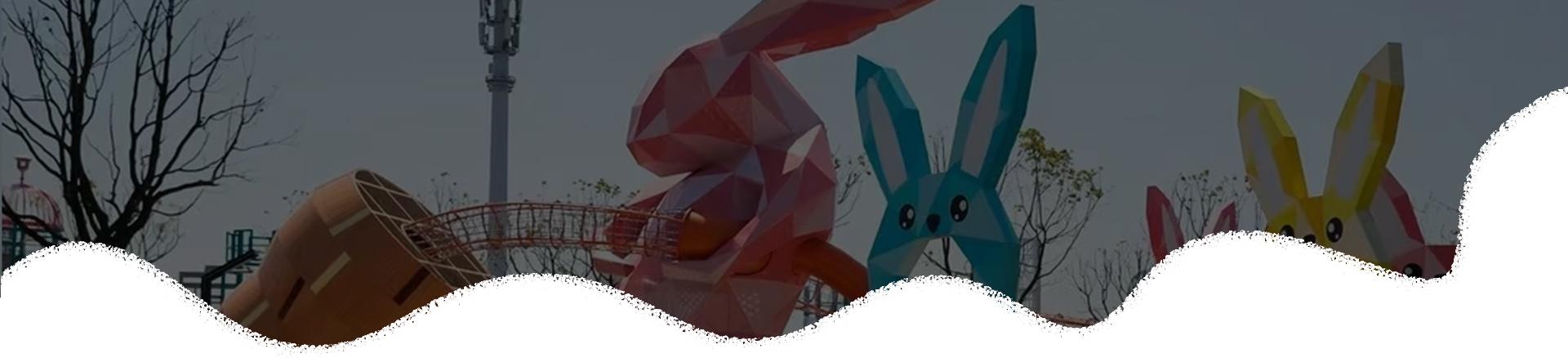
A school playground equipment budget is not just the equipment purchase price. It includes site preparation, surfacing, installation, ongoing maintenance, and parts replacement over the equipment's lifespan. Schools that plan only for the purchase cost often face budget shortfalls in year two or three when maintenance and repair expenses arise. The key is to build a total-cost-of-ownership budget from the start—covering all phases from design through long-term maintenance. This guide walks school administrators through each cost category and provides a practical framework for budget planning.
Most school playground budget problems share a common root: the budget was built around the equipment price only. When the project moves to installation, schools discover that site preparation, surfacing, and shipping were never included. In year two, unexpected maintenance costs emerge. By year five, the school is facing major component replacement without a reserve fund.
A more effective approach is to treat the playground as a multi-year capital asset. The budget should account for the full lifecycle—acquisition, installation, operation, and eventual replacement. This is not about spending more; it is about allocating costs correctly from the beginning.
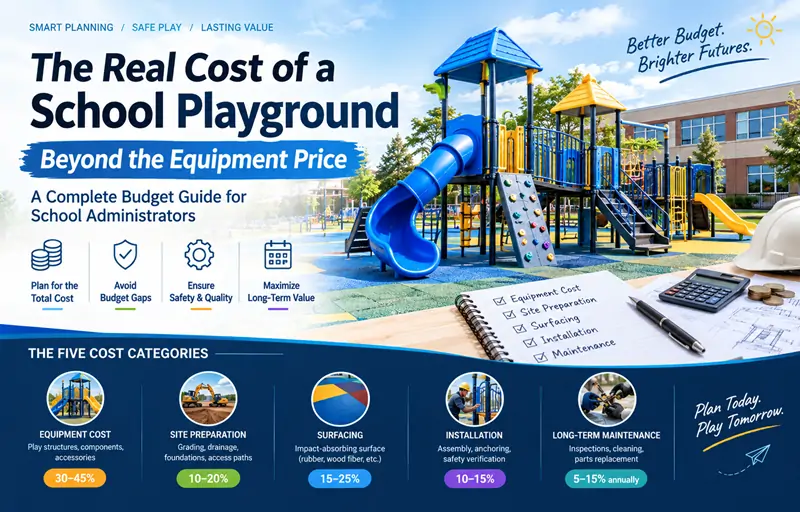
A complete school playground budget covers five categories. Each must be estimated before the project begins.
| Cost Category | What It Covers | Typical Share of Total Budget | Key Planning Consideration |
|---|---|---|---|
| Equipment Cost | Play structures, components, accessories | 30–45% | Varies by size, complexity, and materials |
| Site Preparation | Grading, drainage, foundations, access paths | 10–20% | Depends on ground conditions and site accessibility |
| Surfacing | Impact-absorbing surface (rubber tiles, wood fiber, etc.) | 15–25% | Critical for safety compliance; cost varies by material type |
| Installation | Professional assembly, anchoring, safety verification | 10–15% | Can be reduced if school staff handle some tasks with supplier support |
| Long-Term Maintenance | Inspections, cleaning, lubrication, parts replacement | 5–15% annually | Often overlooked; should be planned as an annual operating expense |
The percentages are indicative ranges. Actual allocation depends on project size, site conditions, and equipment specifications.
Equipment cost is the largest single line item, but it is also the most variable. Several factors determine the final price.
Key cost drivers:
For schools planning a project, the most effective cost strategy is to define requirements clearly before requesting quotes. A vague specification invites inconsistent pricing and difficult comparisons.
Site preparation and surfacing are two areas where school budgets most commonly fall short.
Site preparation includes ground grading, drainage installation, foundation work, and access path construction. The cost depends heavily on existing ground conditions. A level, well-drained site may require minimal work; a sloped or poorly drained site may require significant investment. Sandy soils, clay soils, and rocky ground each require different foundation approaches.
Surfacing is a critical safety component and a significant budget line. The type of surfacing required depends on the critical fall height of the equipment:
The surfacing budget should include both initial installation and ongoing replenishment costs. Schools that choose low-cost surfacing often find their annual maintenance expenses higher than anticipated.
Installation costs vary based on equipment complexity and whether the school uses a professional installation team or handles some work internally.
Professional installation ensures that anchoring, fall zone compliance, and safety clearances meet standards. For schools with maintenance staff, some tasks—such as site clearing and basic assembly—may be handled internally to reduce costs, but structural anchoring and safety verification should always be performed by qualified personnel.
Huaxia's installation standards include site survey and equipment inspection before installation, precise construction and debugging during installation, and acceptance after installation, ensuring standardization and traceability. For schools, this means the equipment is verified to meet safety requirements upon handover.
Maintenance is the most commonly underestimated budget item in school playground projects. Schools that plan for maintenance from the beginning avoid unexpected repair bills and extend equipment lifespan.
Annual maintenance cost factors:
A practical approach is to allocate 3–5% of the initial equipment cost to an annual maintenance reserve. This fund covers routine maintenance and builds toward eventual component replacement.
School playground projects are often funded through a combination of sources. Understanding the available options helps administrators build a realistic financial plan.
The lowest-priced equipment is rarely the lowest-cost option over time. Schools that compare quotes based on purchase price alone often overlook the long-term financial implications.
Factors that affect total cost of ownership:
When evaluating quotes, schools should request information on expected lifespan, maintenance requirements, and parts availability in addition to the purchase price. This information enables a fair comparison of total cost of ownership rather than upfront cost alone.
Use this checklist to guide your budget planning process:
Total project cost varies widely based on size, equipment complexity, site conditions, and material specifications. A small playground for early childhood might start in the lower range, while a large multi-age school playground with custom elements represents a significantly higher investment. The equipment itself typically accounts for 30–45% of total project cost, with site preparation, surfacing, and installation comprising the remainder.
Schools can handle some site preparation and basic assembly tasks with supplier support and documentation. However, structural anchoring, fall zone verification, and safety compliance checks should be performed by qualified professionals. Improper installation can void warranties and create safety hazards.
A practical guideline is to allocate 3–5% of the initial equipment cost to an annual maintenance reserve. Actual costs depend on usage intensity, climate conditions, and material type. Schools with high daily usage and timber equipment should plan for the higher end of this range.
Common funding sources include capital budgets, PTA/PTO fundraising, government and foundation grants, community partnerships, and phased implementation over multiple budget cycles. Some grants specifically target inclusive play spaces or educational playgrounds.
Request itemized quotes that break down equipment cost, shipping, installation, and any additional services. Ask about expected lifespan, warranty terms, parts availability, and maintenance requirements. Compare quotes on total cost of ownership over 10–15 years, not just purchase price.
Yes. Modular playground designs allow schools to start with a core structure and add components in later budget cycles. This approach spreads the investment over time and allows the school to adapt the playground as needs evolve.
Planning a school playground budget requires looking beyond the equipment price to the full lifecycle cost of the project. Site preparation, surfacing, installation, and long-term maintenance are not optional add-ons—they are core budget categories that must be planned from the beginning.
The most important principle is to compare options on total cost of ownership, not upfront price alone. A slightly higher investment in durable materials and professional installation typically pays back through lower maintenance costs, longer lifespan, and reduced downtime.
For schools ready to move from budget planning to equipment selection, review the available playground equipment options or explore Huaxia's commercial-grade solutions designed for institutional environments. For project-specific guidance, contact the team to discuss your requirements and receive a detailed project estimate.

Enter Your E-Mail


Yangwan Industrial Park, Qiaoxia, Yong Jia, Wenzhou, Zhejiang, China