Oct 29, 2026



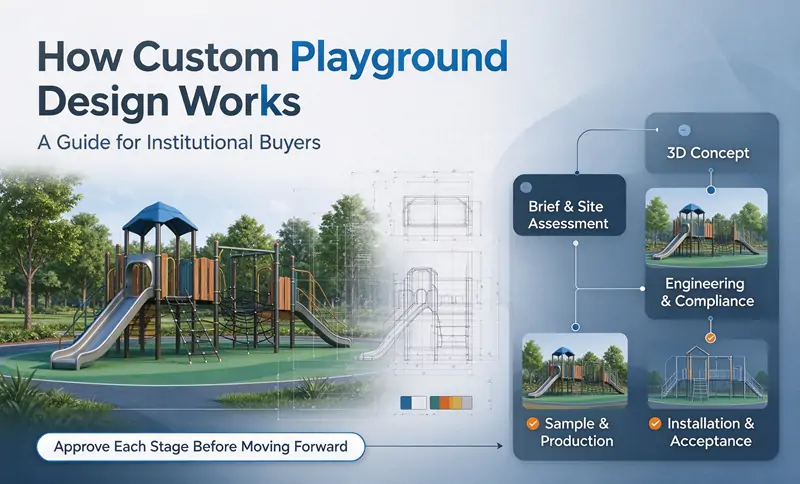
Custom playground design is not a single step—it is a structured process that moves from site assessment and concept development to engineering, production, and installation. Understanding this process helps institutional buyers avoid design revisions, manage timelines, and ensure that the final playground equipment matches the original vision. The key is to follow a clear sequence: define the site and user requirements, approve 3D concepts, verify engineering and safety compliance, and validate a sample before full production. This guide walks through each stage of how custom design works.
Standard playground equipment is selected from a catalog. Custom projects begin with a blank slate, which introduces both opportunities and risks. The opportunity is that the playground can fit unique spaces, match architectural themes, or serve specific user groups. The risk is that without a structured process, the project can stall in endless design revisions or result in equipment that does not meet expectations.
A structured process provides checkpoints—points where the buyer approves the direction before the project moves forward. This protects both the buyer and the supplier from costly misunderstandings.
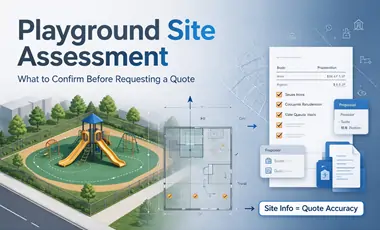
The process starts with gathering information. The supplier needs to understand the site, the intended users, and the desired experience.
What the buyer provides:
What the supplier does:
At this stage, Huaxia's custom playground design team works with the buyer to confirm the project brief and identify the best layout direction.
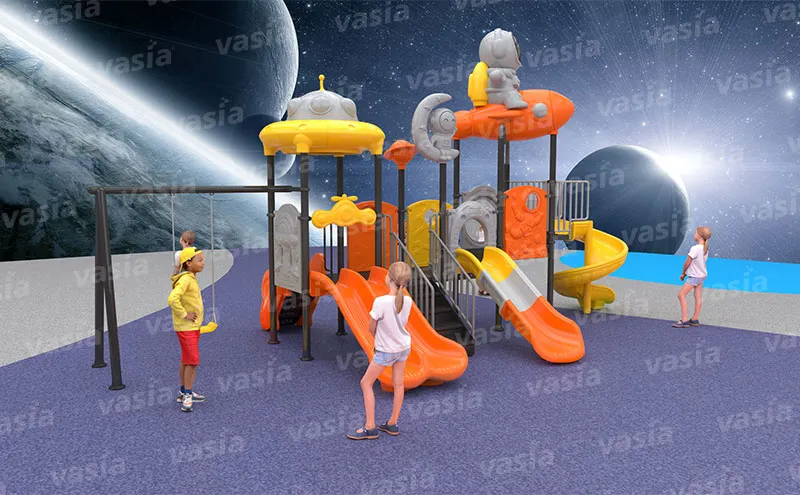
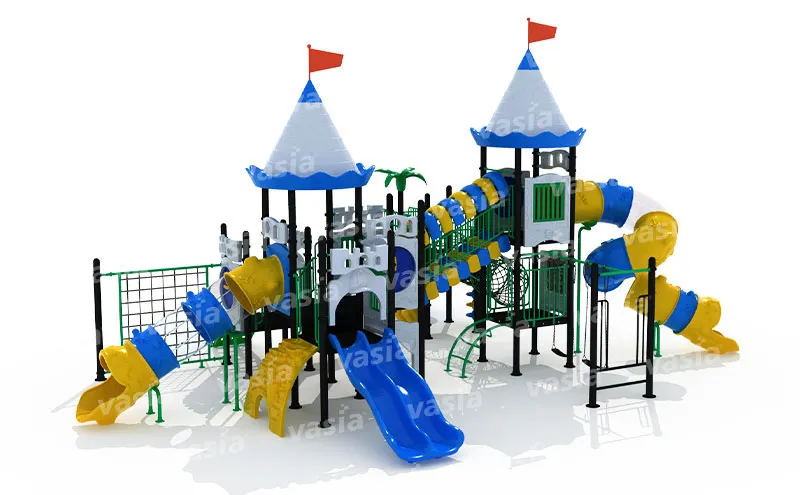
Once the brief is confirmed, the design team creates concept options. For custom projects, this usually involves 3D renderings that show how the playground will look in the actual space.
What to expect:
How to review concepts:
This is the stage where changes are cheapest to make. Once the concept is approved and engineering begins, changes become more costly. Reviewing completed projects from similar applications can help buyers evaluate whether a proposed concept is practical.
A design concept is not the same as an engineered product. In this stage, the approved concept is translated into technical drawings and checked against safety standards.
What the supplier does:
What the buyer should verify:
For complex or high-traffic projects, reviewing commercial-grade equipment specifications can help buyers understand which engineering standards apply to their project.
Before full-scale production, some custom projects involve a sample or prototype of specific components. This is especially common for themed elements, custom panels, or complex structural pieces.
Why sampling matters:
Production phase:
Once the sample is approved, full production begins. Huaxia's standard production runs take approximately 15–30 days depending on size and quantity. During production, quality control checks occur at the incoming material stage, during assembly, and before packaging.
Before the equipment leaves the factory, it undergoes a final inspection.
What to verify:
Logistics planning should also be confirmed at this stage: shipping method, delivery timeline, and site access requirements. For custom projects, the shipping volume and packaging may differ from standard equipment, so confirming these details early prevents delays.
The final stage is installation on site. For custom projects, the installation crew must work from the engineered drawings and the approved layout.
What to expect:
After installation, the buyer should receive acceptance documentation, warranty information, and maintenance guidelines. Any deviations from the approved design should be documented and explained.
Custom projects are more likely to succeed when the buyer follows a few practical rules.
Use this checklist to track progress:
The timeline depends on project complexity and the number of design revisions. A straightforward custom project with standard components may take 4–8 weeks from concept approval to shipment. Complex themed projects with custom structural elements and samples can take 3–6 months or more. Production time alone is typically 15–30 days.
Yes. 3D renderings are a key checkpoint. They allow you to verify layout, visual style, and component placement before engineering and production begin. Approving the renderings in writing helps prevent misunderstandings later.
Changes are possible but may incur additional costs and delay the timeline. Engineering changes may require recalculating structural loads, modifying production drawings, or reordering materials. It is more efficient to resolve design questions during the concept and rendering stages.
Custom equipment should be designed to meet the same safety standards as standard equipment—typically EN1176 or ASTM F1487, depending on the destination market. Huaxia's products are tested by German TUV and meet EN71 and EN1176 standards. Request compliance documentation for the specific custom design.
The acceptance process should include a comparison against the approved drawings and renderings. If discrepancies are found, document them immediately and notify the supplier before installation begins. A structured approval process at each stage reduces the likelihood of this issue.
In many cases, yes. Modular design allows for future expansion, but the extent depends on the original structural design and available space. If future expansion is anticipated, state this in the project brief so the supplier can design for it from the start.
Custom playground design is a process of moving from concept to reality through a series of defined stages: site assessment, concept design, engineering, sampling, production, and installation. Each stage has checkpoints where the buyer can verify that the project is on track.
The most important principle is to approve each stage deliberately. Rushing through the concept or engineering phase often leads to costly changes later. Ask for documentation at each step, consolidate feedback through a single point of contact, and confirm logistics before production begins.
If you are planning a custom playground project and want to understand how the design process applies to your site, review the available playground equipment options or explore Huaxia's design and production capabilities. For project-specific questions, contact the team to discuss your requirements.
Enter Your E-Mail


Yangwan Industrial Park, Qiaoxia, Yong Jia, Wenzhou, Zhejiang, China