Oct 08, 2026



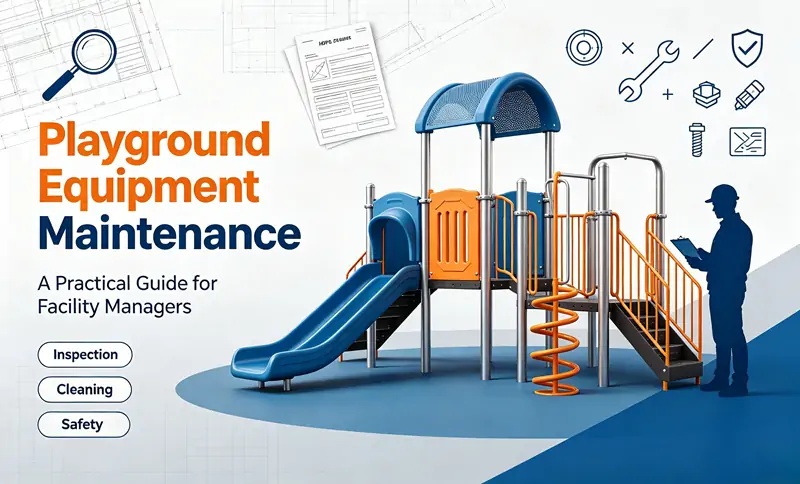
Buying playground equipment is only the first step. Keeping it safe, functional, and visually appealing over its lifetime requires a systematic maintenance program. Without regular inspection and care, even the best-built equipment can develop loose hardware, rust, cracks, or wear that compromise safety and shorten its lifespan. The key to effective maintenance is a proactive approach: regular inspections, timely cleaning, proper lubrication, and prompt replacement of worn parts. This guide provides facility managers with a practical framework for maintaining commercial playground equipment.
Playground equipment faces constant challenges. Weather—sun, rain, snow, and temperature fluctuations—takes a toll on materials. Heavy use by hundreds of children daily accelerates wear on moving parts and surfaces. Safety standards require that equipment remains in good condition to protect users.
A well-maintained playground:
Huaxia's after-sales service emphasizes this proactive approach, offering personalized maintenance plans based on equipment usage and characteristics.
Inspection frequency depends on usage intensity and environmental conditions. A general framework:
| Inspection Type | Frequency | Who Should Do It | What to Check |
|---|---|---|---|
| Visual / Daily | Daily (high-traffic) | On-site staff | Obvious hazards, broken glass, vandalism, debris |
| Routine | Monthly | Facility staff | Loose hardware, surface wear, rust, cracks |
| Detailed | Quarterly | Trained inspector | Structural integrity, moving parts, surfacing depth |
| Annual | Yearly | Certified inspector | Full structural assessment, compliance with EN1176/ASTM |
High-traffic public playgrounds should have visual inspections weekly and more detailed inspections monthly or quarterly. Low-traffic private playgrounds may need less frequent inspections but should still be checked regularly.
Use this checklist during routine inspections:
Structural Components:
Surfaces and Surfacing:
Moving Parts:
Hardware and Fasteners:
General:
| Issue | Likely Cause | Recommended Action | Prevention |
|---|---|---|---|
| Rust on steel | Coating damage, humidity | Sand and apply rust-inhibiting primer, touch up coating | Regular coating inspection, prompt repair of scratches |
| Loose bolts | Vibration from use | Tighten to manufacturer's torque specification | Use locking nuts, check during routine inspections |
| Cracked plastic | Impact, UV degradation | Replace affected panel or component | Use UV-stabilized HDPE, inspect regularly |
| Worn swing bearings | Normal wear | Replace bearings | Lubricate periodically, replace at first sign of wear |
| Splintered timber | Weather exposure, age | Sand and seal; replace severely damaged sections | Regular sealing, prompt repair of minor damage |
| Surfacing compaction | Heavy use, weather | Rake and top up as needed | Regular raking, scheduled topping up |
Huaxia maintains over 500 types of common parts in stock, with regular parts typically delivered within about 2 days. For commercial-grade equipment, this rapid parts availability minimizes downtime.
Different seasons bring different maintenance challenges.
Spring:
Summer:
Autumn:
Winter:
Proper maintenance can significantly extend the service life of playground equipment.
Expected lifespans with good maintenance:
Tips for extending lifespan:
Huaxia's after-sales service includes personalized maintenance plans based on equipment usage and characteristics, with regular inspection, cleaning, lubrication, and fastening work to prevent failures and extend service life.
While routine maintenance can be handled by facility staff, certain situations require professional attention:
Huaxia's repair personnel can arrive at the site within 48 to 72 hours for professional service. Their dedicated after-sales service team of more than 50 people provides rapid response through service hotlines, email, and online messaging.
Mistake 1: Waiting until something breaks. Preventive maintenance is more cost-effective than emergency repairs.
Mistake 2: Using the wrong cleaning products. Harsh chemicals can damage plastic, strip coatings, or create slippery surfaces.
Mistake 3: Ignoring small issues. A small rust spot or loose bolt can become a major problem if left unaddressed.
Mistake 4: Overlooking surfacing. Impact-absorbing surfacing is a critical safety feature that requires regular attention.
Mistake 5: Failing to keep records. Without documentation, it's difficult to track wear patterns or plan maintenance schedules.
High-traffic public playgrounds should have visual inspections weekly and more detailed inspections monthly or quarterly. Low-traffic private playgrounds may need less frequent inspections but should still be checked regularly. Always follow the manufacturer's recommended inspection schedule.
The most common issues are loose bolts and fasteners, rust on steel components, worn swing bearings, cracked or faded plastic parts, and compacted or displaced surfacing material.
Use galvanized steel with a protective coating. Inspect regularly for scratches or chips in the coating and touch them up promptly. In coastal or high-humidity areas, hot-dip galvanized steel provides superior corrosion resistance.
HDPE requires minimal maintenance—primarily cleaning with mild soap and water to remove dirt and checking periodically for cracks or damage. It does not require painting, sealing, or rust prevention.
Replace surfacing when it no longer provides adequate impact absorption, when it has become compacted below the required depth, or when it shows signs of deterioration such as crumbling, displacement, or contamination.
Routine maintenance such as cleaning, tightening bolts, and visual inspections can be performed by facility staff. Annual safety inspections, structural repairs, and major parts replacement should be handled by certified professionals.
Maintaining playground equipment is not complicated, but it does require consistency and attention to detail. A systematic approach—regular inspections, prompt repairs, seasonal care, and proper documentation—will keep equipment safe, extend its lifespan, and reduce long-term costs.
The most important principle is to be proactive. Don't wait for equipment to fail before taking action. Small issues caught early are easy and inexpensive to fix. Large issues left unaddressed can lead to accidents, liability, and costly early replacement.
If you need professional maintenance support or replacement parts for your playground equipment, explore Huaxia's after-sales service options or contact the team for project-specific guidance. For information on equipment built to last, review the available playground equipment configurations designed with maintenance in mind.
Enter Your E-Mail


Yangwan Industrial Park, Qiaoxia, Yong Jia, Wenzhou, Zhejiang, China