Sep 18, 2026




A playground with a standard colour palette and off‑the‑shelf components can serve its basic function, but it rarely creates a sense of place. A themed playground – whether it reflects the maritime history of a coastal town, the natural landscape of a national park, or the visual identity of a resort brand – gives children and families a reason to visit and return. Custom theming turns a functional play space into a local landmark and a marketing asset. The design process, however, requires more than selecting a colour scheme. It must translate a concept into physical structures that meet safety standards, withstand outdoor exposure, and stay within budget.
This guide walks through the steps of designing a custom‑themed outdoor play environment, from defining the theme to working with a manufacturer to produce compliant, durable equipment.
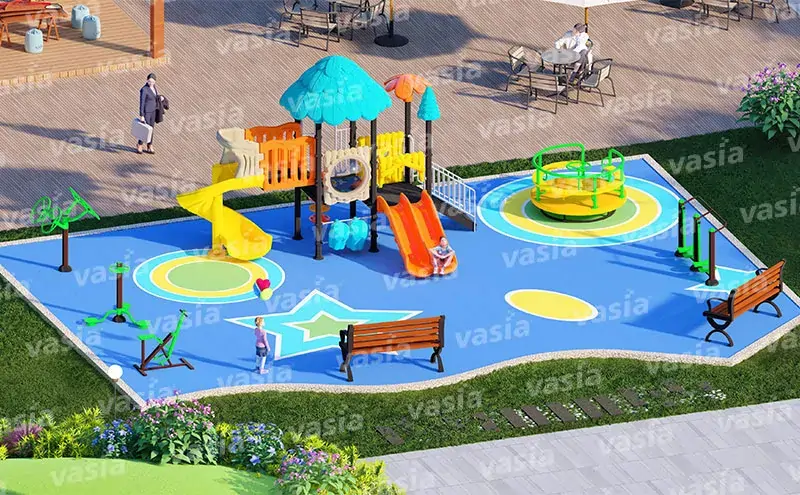
The first question to answer is why the playground needs a theme. The answer will drive every subsequent decision. Three common drivers are:
Community identity. A park in a fishing village might adopt a nautical theme. A playground in a historic district might incorporate elements from the area's architectural heritage. The theme becomes a way for residents to feel ownership of the space.
Brand reinforcement. A resort, hotel, or family entertainment centre can extend its visual brand into the play area, using the same colours, mascots, or design language that appear elsewhere on the property. Children recognise the brand through the play experience.
Educational or environmental storytelling. A nature‑themed playground can teach children about local wildlife or ecosystems. An industrial‑heritage theme can reflect a city's manufacturing past. The play equipment becomes a learning tool.
Clarifying the purpose helps narrow the design direction and gives the manufacturer a clear brief to work from.
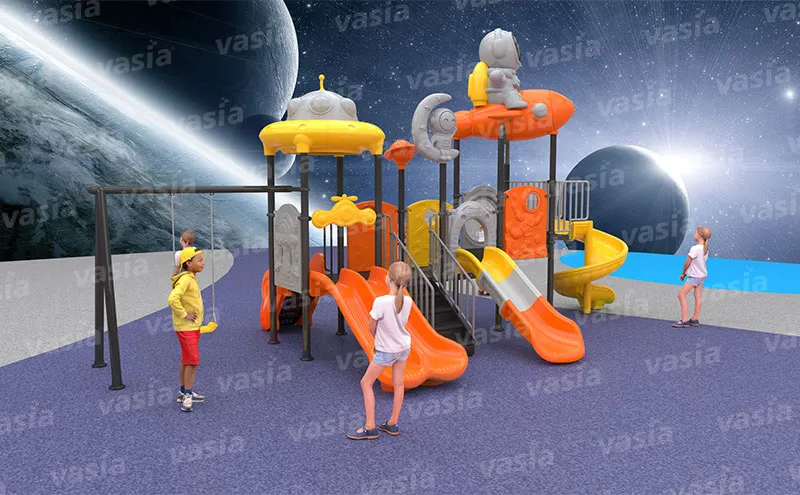
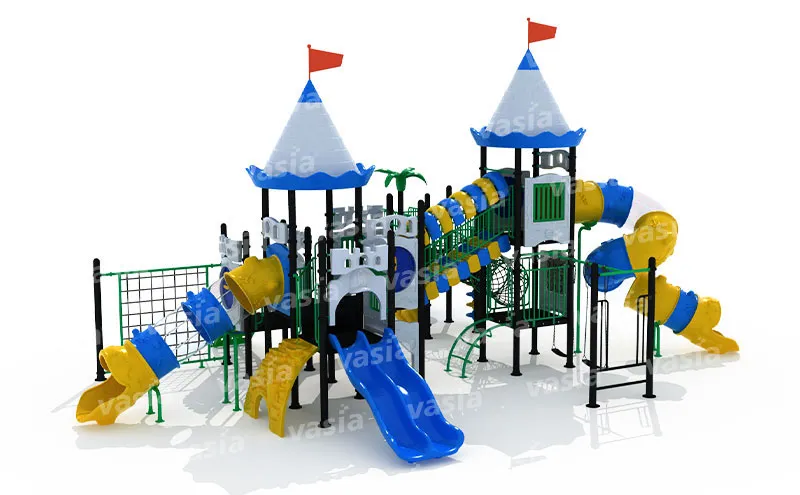
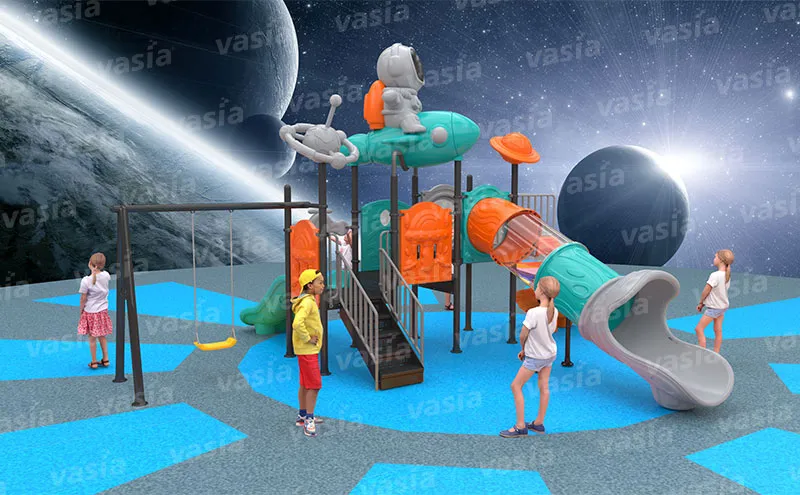
A theme is not just a paint job. It must be embedded in the shapes, textures, and play functions of the equipment. A jungle theme, for example, can include tree‑trunk‑shaped climbing structures, a rope bridge resembling a vine crossing, and a slide that exits through a cave‑like opening. A space theme might feature a rocket‑shaped tower with a porthole window and a moon‑crater sand pit.
The design team should produce concept sketches or 3D renderings that show how the abstract theme becomes physical equipment. At this stage, the focus is on visual impact and play value, not on engineering detail. The goal is to create a shared understanding between the client and the manufacturer of what the finished playground will look like.
When evaluating manufacturers, it is useful to look at their existing portfolio of custom work. Vasia's range of custom‑themed playground solutions includes examples that show how standard components can be adapted to a client's specific theme, which helps set realistic expectations for what is achievable within a given footprint and budget.
The materials chosen must serve two purposes: they must be able to be shaped and coloured to achieve the theme, and they must withstand the environment in which the playground will be installed.
Hot‑dip galvanised steel forms the structural frame for most themed playgrounds. It resists corrosion and can be powder‑coated in almost any colour, making it suitable for representational shapes like ship hulls, castle walls, or tree trunks.
HDPE (high‑density polyethene) panels are used for slides, roofs, and decorative elements. They can be moulded into custom shapes and UV‑stabilised to hold their colour for years without fading.
Glass‑fibre reinforced plastic (GRP) allows for sculptural elements that would be difficult to achieve with metal or polyethene, such as rock formations, animal figures, or curved tunnels.
Plasticised wood can be used for a natural‑look finish on walkways, benches, and climbing walls, combining the appearance of timber with the durability of plastic.
Each material must be verified as meeting the relevant safety standards (EN 1176 in Europe, ASTM F1487 in North America) for structural integrity, entrapment, and impact attenuation. The manufacturer should provide test reports for both the standard components and any custom elements. For projects that require unique shapes or branded elements, it is worth discussing custom fabrication capabilities for themed play structures with the manufacturer early in the design process.
Custom shapes create unique safety‑compliance challenges. A dragon's mouth that serves as a tunnel entrance must meet the same minimum opening dimensions as a standard tunnel to prevent head entrapment. A lighthouse‑shaped tower must have guardrails that meet the required height for the platform elevation.
The manufacturer's engineering team must review the design against the applicable safety standard and identify any adjustments needed. This is a critical step that should not be rushed. A design that looks correct in a rendering may fail an entrapment test if a decorative element creates a narrow gap at the wrong height.
Working with a manufacturer that has in‑house engineering capability – rather than one that subcontracts design to a third party – speeds up this review process because the designer and the engineer are in the same building. It also reduces the risk of a design being approved conceptually but then proving impossible to build within the safety constraints. When safety compliance is a priority, custom playground equipment with integrated engineering and safety review provides the assurance that the final structure will pass inspection.
A themed playground with custom colours and shapes requires more attention during installation than a standard configuration. The installation team must follow the manufacturer's drawings precisely, because a decorative panel placed in the wrong orientation can disrupt the visual continuity of the theme.
Maintenance considerations should be part of the design from the start. Custom‑coloured panels will eventually need replacement if they are damaged by vandalism or extreme weather. The manufacturer should supply the colour formulas or material specifications so that replacement parts can be matched to the original theme years after installation. Spare‑part availability – particularly for custom‑moulded elements – should be confirmed before the order is placed.
For a full overview of the customisation options and the technical support available, Vasia's themed outdoor play equipment is designed with modular components that can be configured to a client's specific theme while maintaining compliance with international safety standards.
A custom‑themed playground is a collaboration between the client, who knows the community or brand, and the manufacturer, who knows how to translate ideas into safe, durable equipment. The steps above – defining the purpose, translating the theme into play elements, selecting materials, ensuring safety compliance, and planning for maintenance – provide a framework for managing that collaboration effectively.
The result is a play space that children remember, parents photograph, and the community claims as its own. In a market where generic playground equipment is abundant, a well‑executed custom theme is the factor that makes a play space stand out.
Enter Your E-Mail


Yangwan Industrial Park, Qiaoxia, Yong Jia, Wenzhou, Zhejiang, China