Oct 20, 2026




Selecting playground equipment for a school requires balancing safety compliance, age-appropriate design, durability, educational value, and budget constraints. Unlike commercial entertainment venues, school playgrounds must meet specific regulatory standards, accommodate structured play schedules, and serve children across multiple age groups—often on the same site. This guide walks through the key factors educators and administrators should evaluate before purchasing playground equipment for an educational setting.
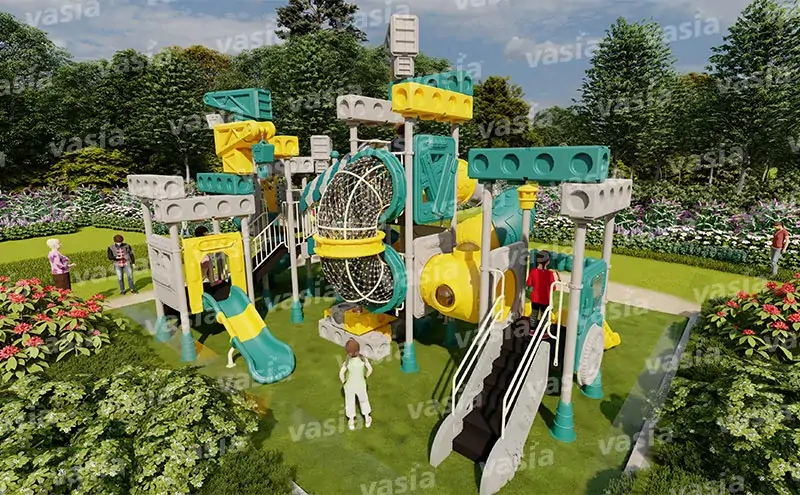
A school playground is not the same as a public park or a commercial play center. The equipment must withstand concentrated use during recess periods, serve a defined age range of children, comply with educational facility safety standards, and often integrate with physical education curricula. Equipment failure or safety gaps in a school setting carry legal and reputational risks beyond those of a general public playground.
When evaluating custom playground equipment for a school, decision-makers should start with the regulatory framework, then work through material choices, age-group zoning, and long-term maintenance planning.
School playground equipment in most regions must comply with specific safety standards. The two most widely referenced are:
| Standard | Region | Key Requirements |
|---|---|---|
| EN 1176 | European Union | Impact attenuation, entrapment prevention, structural integrity, surfacing requirements |
| ASTM F1487 | United States | Public use playground equipment safety, head entrapment, protrusions, crush points |
Beyond these, schools should verify that the equipment meets any local or national education facility regulations, which may impose additional requirements for supervision sightlines, accessibility, and fall zone dimensions.
Third-party testing documentation—such as TÜV or SGS certification reports—provides independent verification that the equipment meets the claimed standards. Schools should request these documents as part of the procurement process and retain them for safety audit purposes.
School playgrounds often serve a wider age range than public parks. A primary school may need to accommodate children from ages 4 to 12, while a kindergarten focuses on ages 2 to 6. Equipment designed for older children can pose hazards to younger ones, and equipment designed for toddlers will not engage older students.
A practical approach is to divide the playground into age-appropriate zones:
| Age Group | Recommended Equipment Types | Key Design Features |
|---|---|---|
| 2–4 years | Low platforms, short slides, sensory panels, sand play | Maximum platform height 60cm, enclosed guardrails, soft surfacing throughout |
| 5–8 years | Climbing structures, medium slides, swings, balance beams | Platform heights 60–120cm, graduated challenge levels, open sightlines for supervision |
| 9–12 years | Higher climbing walls, cable walks, team-based challenge courses | Platform heights up to 180cm, physically demanding elements, social interaction zones |
If the playground serves multiple age groups, physical separation between zones—using fencing, landscaping, or buffer areas—helps prevent younger children from accessing equipment designed for older students.
School playground equipment experiences concentrated use. Unlike a public park where usage spreads across the day, a school playground sees hundreds of children during short recess periods. The materials must withstand this intensity without degrading.
| Material | Durability | Maintenance | Best For |
|---|---|---|---|
| Galvanized steel | High; resists rust and structural fatigue | Low; periodic inspection of fasteners | Structural frames, posts |
| HDPE | High; UV-stabilized, resists fading and cracking | Low; occasional cleaning | Slides, panels, roofs |
| LLDPE | Very high; impact-resistant, flexible | Very low | Rotomolded components, climbers |
| Timber | Moderate; requires treatment against rot and insects | High; annual sealing, splinter checks | Natural-themed structures |
| Glass fiber reinforced plastic | High; weather-resistant, moldable into complex shapes | Low; occasional surface inspection | Themed elements, sculptural pieces |
For most school applications, a combination of galvanized steel frames with HDPE or LLDPE components offers the best balance of durability and maintenance requirements. The steel provides structural integrity, while the plastic components resist weather and impact without requiring painting or sealing.
When reviewing available playground equipment configurations, schools should request material specifications in writing and verify that the manufacturer's stated materials match the environmental conditions of the installation site—particularly for coastal areas (salt corrosion) or regions with extreme temperature swings.
The purchase price of playground equipment is only one component of the total cost. Schools should budget for:
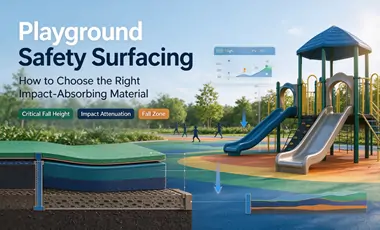
Safety surfacing often represents a significant portion of the total project cost. The choice of surfacing material affects both the initial installation budget and the ongoing maintenance commitment.
| Surfacing Type | Initial Cost | Maintenance | Lifespan |
|---|---|---|---|
| Engineered wood fiber | Lower | Annual top-up required | 3–5 years |
| Rubber mulch | Moderate | Periodic raking, top-up | 5–8 years |
| Poured-in-place rubber | Higher | Low; periodic cleaning | 10–15 years |
| Synthetic turf with padding | Higher | Moderate; brushing, infill top-up | 8–12 years |
Schools with limited maintenance staff may benefit from higher-initial-cost surfacing that requires less ongoing attention.
School playgrounds present an opportunity to integrate physical activity with educational goals. Equipment choices can support curriculum objectives without turning the playground into a classroom.
Options that blend play with learning include:
These elements can be incorporated into custom outdoor play structures designed for educational settings without sacrificing the free-play experience that children need during recess.
Schools have a particular responsibility to provide inclusive play environments. Depending on the jurisdiction, accessibility requirements may be mandated by education regulations or disability access laws.
Key inclusive design considerations:
Inclusive design does not mean every element must be accessible to every child. The goal is to ensure that children of all abilities can participate meaningfully in the play environment.
A school playground that receives daily use requires a structured maintenance program. Without it, minor issues escalate into safety hazards and costly repairs.
Schools should designate a staff member responsible for playground inspection and maintain a written log of all checks and maintenance activities. This documentation is valuable for safety audits and insurance purposes.
A: School playground equipment should meet EN 1176 (European) or ASTM F1487 (US) standards. Request third-party testing documentation from organizations such as TÜV or SGS. Additionally, verify that the equipment complies with any local education facility regulations, which may impose requirements beyond the general playground standards.
A: Service life depends on materials, usage intensity, climate, and maintenance quality. Galvanized steel frames can last 15–20 years with proper maintenance. HDPE and LLDPE components typically last 10–15 years. Timber structures may require replacement or major refurbishment after 8–12 years. Regular inspections and timely replacement of worn components extend the overall lifespan.
A: Yes, but the playground should be zoned by age group with appropriate equipment in each zone and physical separation between areas designed for younger and older children. Alternatively, some equipment can be designed with graduated challenge levels to engage a wider age range.
A: The choice depends on budget, maintenance capacity, and accessibility requirements. Poured-in-place rubber offers the lowest maintenance and best accessibility but has a higher initial cost. Engineered wood fiber is more affordable initially but requires annual top-up and periodic full replacement.
A: A typical custom playground project takes 8–12 weeks from order confirmation to delivery, plus additional time for site preparation and installation. Schools should begin the planning and budgeting process at least 6 months before the desired installation date to allow for design, approval, manufacturing, and shipping.
A: Cost is influenced by equipment size and complexity, materials selected, customization level, safety surfacing type and area, site preparation requirements, and shipping distance. Schools should request detailed quotations that separate equipment, surfacing, installation, and shipping costs for accurate budget planning.
Choosing playground equipment for a school is a decision that affects student safety, physical development, and the school's operational budget for years to come. The most important factors—safety compliance, age-appropriate zoning, material durability, and maintenance planning—should be evaluated systematically rather than in isolation.
Schools that document their requirements, verify safety certifications, budget for the total cost of ownership including surfacing and maintenance, and plan for long-term inspection and upkeep are best positioned to make a purchasing decision that serves students and staff well over the equipment's full service life. When comparing options, reviewing custom playground configurations designed for institutional use provides a starting point for matching equipment specifications to educational facility requirements.
The safety standards, material specifications, and procurement recommendations in this article are provided for informational purposes based on general industry practice. Actual requirements vary by jurisdiction, educational facility regulations, and project-specific conditions. Schools should verify all safety compliance requirements with local authorities and consult with qualified playground safety inspectors before finalizing equipment purchases. This article does not constitute legal, safety, or procurement advice.

Enter Your E-Mail


Yangwan Industrial Park, Qiaoxia, Yong Jia, Wenzhou, Zhejiang, China