Sep 29, 2026



Ordering playground equipment for a shopping mall, resort, or public park is fundamentally different from buying a backyard swing set. The structures must withstand daily use by hundreds of children, hold up under sun and rain for years, and meet safety standards that protect both the children and the operator from liability. A purchasing decision based solely on the catalogue price or the appearance of a single structure can lead to early rust, faded panels, cracked slides, and—worst of all—a playground that sits empty because families do not feel it is safe or exciting.
A structured evaluation before purchase reduces the risk of choosing Commercial Play Equipment that looks good on day one but deteriorates rapidly under commercial traffic. The seven factors below provide a framework for comparing suppliers and selecting playground structures that will serve a business or community for a decade or more.
The first and most important factor is whether the equipment meets recognised safety standards. In Europe, the relevant standard is EN 1176, which covers impact attenuation, entrapment gaps, guardrail heights, and structural integrity. In North America, ASTM F1487 serves a similar role. These standards are not optional for public playgrounds—they are the minimum requirement for insurance, liability protection, and, in many jurisdictions, legal operation.
A reputable manufacturer provides third‑party test reports from an accredited laboratory for each product. These reports confirm that the equipment has been tested for critical fall height, head and neck entrapment, and load‑bearing capacity. A supplier that cannot produce these reports should be eliminated from consideration. For operators seeking EN1176‑certified commercial play systems, the certification documentation should be reviewed alongside the product specifications.
The materials used in a playground determine how long it will look good and function safely. Three materials dominate the commercial playground market, and each has a specific role:
Hot‑dip galvanised steel forms the structural frame. The galvanising process applies a zinc coating that protects the steel from rust. In coastal or high‑humidity environments, this coating is essential—powder‑coated steel without galvanising will rust within a few years.
UV‑stabilised HDPE (high‑density polyethene) is used for slides, roofs, and decorative panels. HDPE panels resist fading and cracking under intense sunlight, which is why they are preferred for outdoor installations in sunny climates.
Plasticised wood and glass‑fibre reinforced plastic (GRP) are used for specific aesthetic or structural applications. Plasticised wood offers a natural appearance without the maintenance demands of real timber, while GRP allows sculptural shapes that would be difficult to achieve with metal or polyethene.
When comparing suppliers, request a bill of materials that specifies the grade of steel, the thickness of the HDPE panels, and the galvanising standard. A supplier that is vague about these details may be using lower‑grade materials that will not survive heavy use.
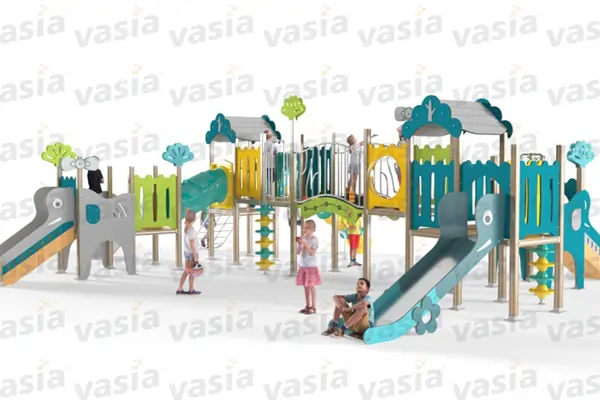
A commercial playground serves a wide age range—from toddlers who are just learning to walk to school‑aged children who want physical challenges. The equipment must be divided into zones that match these different developmental stages. A toddler zone should include low‑level slides, sensory panels, and soft climbing elements with platform heights under 1.2 metres. A junior zone can include higher platforms, rope bridges, and more complex climbing challenges.
Inclusive design is also a requirement for many public projects. Ramps, transfer stations, and ground‑level play panels allow children with mobility limitations to participate. A playground that meets ADA (Americans with Disabilities Act) or equivalent local accessibility standards broadens the user base and demonstrates a commitment to serving the entire community.
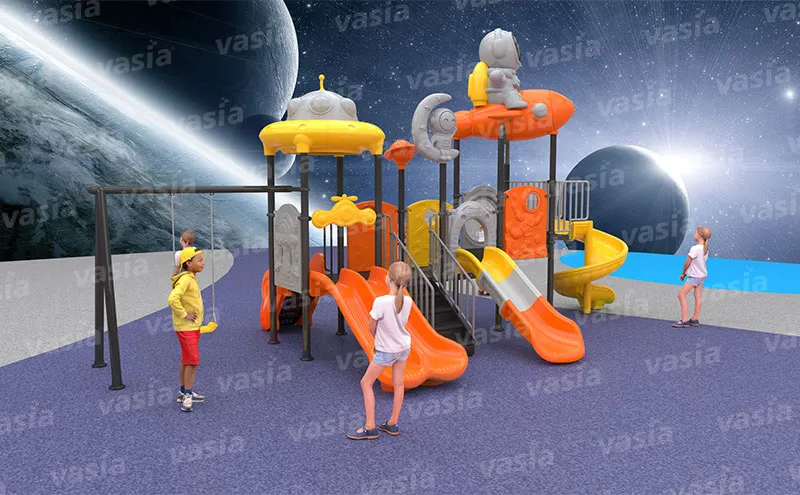
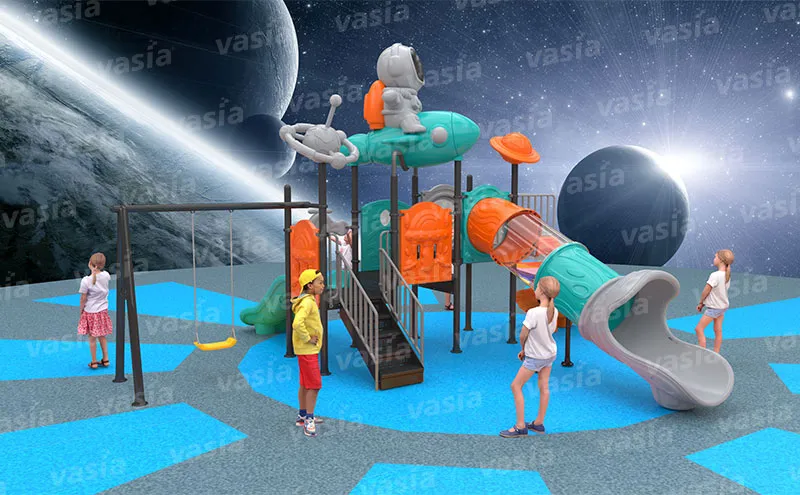
A standard, off‑the‑shelf playground will function adequately, but it will look similar to playgrounds in dozens of other locations. For a shopping mall or resort that wants the playground to be part of the brand experience, custom theming is a valuable differentiator. A nautical theme for a coastal resort, a jungle theme for an eco‑lodge, or a space theme for a science museum—each creates a destination that families remember and revisit.
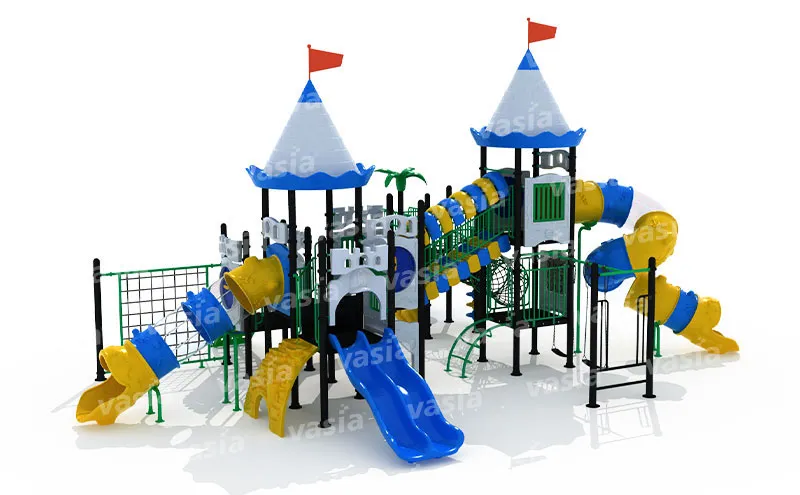
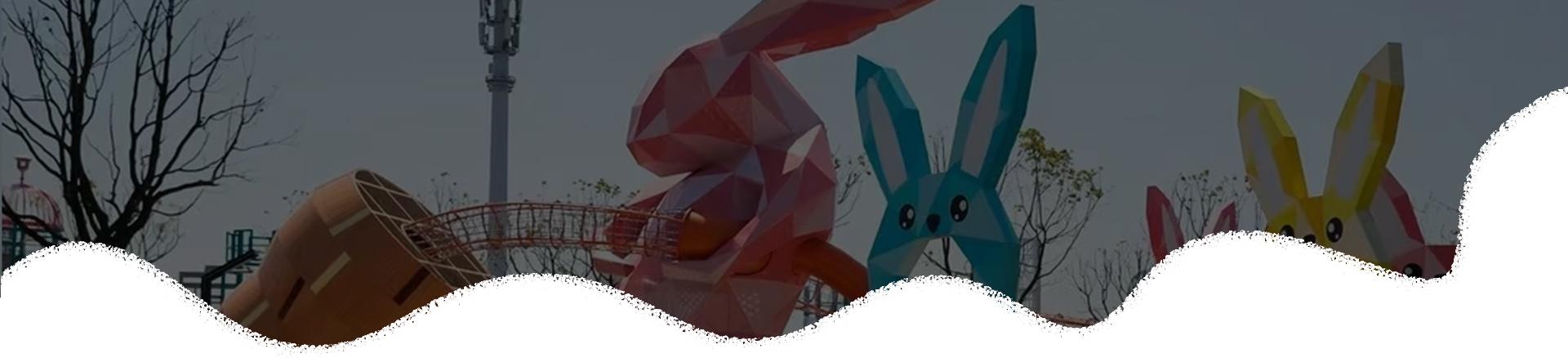
Customisation goes beyond paint colour. It includes the shape of the structures, the design of the panels, and the integration of the playground with the surrounding architecture. When evaluating suppliers, review their portfolio of custom projects to assess their design capability. Vasia's range of commercial play structures includes custom‑themed options that align with a venue's brand identity while maintaining EN 1176 compliance.
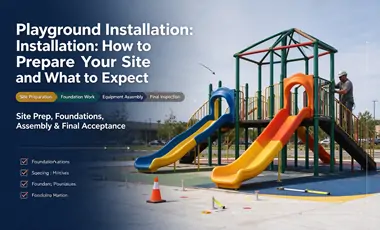
The equipment purchase is only part of the total project. Site preparation, foundation work, safety surfacing, and installation all contribute to the timeline and budget. Some suppliers provide turnkey project management that includes site assessment, CAD layout planning, installation supervision, and a post‑installation safety audit. Others deliver the equipment and leave the rest to the buyer.
The turnkey approach is generally more expensive upfront but reduces the risk of installation errors that can create safety hazards or shorten the equipment's lifespan. If the buyer manages the installation independently, the supplier should provide detailed installation drawings, a bill of materials, and technical support during the build.
Every playground requires maintenance, but the design of the equipment determines how much. Self‑lubricating bearings, sealed joints, and tamper‑proof fasteners reduce the time spent on weekly inspections. HDPE panels are easier to clean than painted steel, and galvanised frames do not need repainting.
Spare‑parts availability is equally important. A playground that is closed for a month while a replacement slide or bearing is manufactured and shipped represents lost revenue and disappointed customers. Before ordering, confirm that the supplier stocks common spare parts and can ship them within days, not weeks. The warranty terms—typically 5 to 15 years on the main structure—should also be reviewed and compared across suppliers.
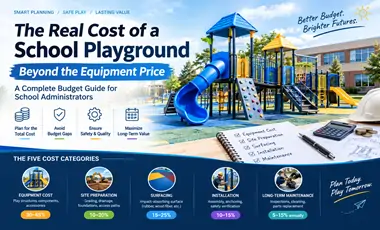
The purchase price of the equipment is the most visible cost, but it is not the only one. Installation, safety surfacing, annual maintenance, and eventual replacement of wear components all add to the total cost of ownership over the playground's 15‑ to 25‑year service life. A lower purchase price that comes with higher maintenance costs or earlier replacement can be more expensive in the long run.
A useful comparison metric is the cost per year of service life, calculated by dividing the total installed cost (equipment plus installation plus surfacing) by the expected lifespan. This metric allows a fair comparison between a lower‑cost structure with a 10‑year warranty and a higher‑cost structure with a 15‑year warranty.
The seven factors above—safety certification, material quality, age‑appropriate design, customisation, installation support, maintenance, and total cost—provide a framework for evaluating proposals from multiple suppliers. A structured comparison reduces the risk of choosing equipment that fails prematurely or does not meet the operational needs of the venue. For organisations seeking a comprehensive range of commercial playground solutions backed by EN1176 certification, working with a supplier that provides detailed specifications and project support from design through to installation simplifies the procurement process.
A well‑chosen commercial playground is an asset that attracts families, increases dwell time, and enhances the reputation of the venue. The investment in careful evaluation before purchase pays back in years of reliable, safe, and attractive service.

Enter Your E-Mail


Yangwan Industrial Park, Qiaoxia, Yong Jia, Wenzhou, Zhejiang, China