Oct 08, 2026




To ensure the long-term safety of park play equipment, facility managers must implement a "Triple-Check" protocol: routine visual inspections (weekly), operational detailed audits (monthly), and comprehensive structural certifications (annually). According to the National Recreation and Park Association (NRPA), over 70% of playground injuries are caused by falls, making the maintenance of impact-attenuating surfacing and hardware integrity non-negotiable for liability protection and child welfare.
Most people see a slide; an engineer sees friction points and UV degradation. Maintaining a recreational space isn't just about aesthetics—it's about managing the molecular breakdown of materials. Steel components require constant monitoring for structural oxidation, while high-density polyethylene (HDPE) panels must be checked for "chalking" or brittleness caused by intense solar exposure.
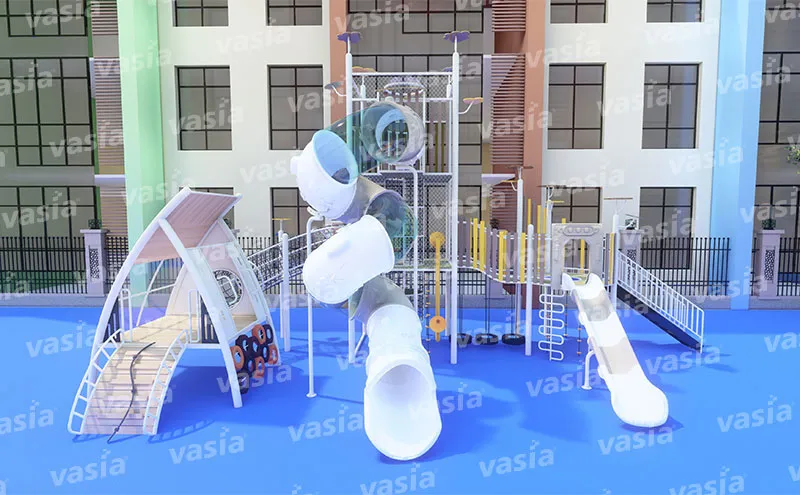
I’ve often observed that the most overlooked hazard is the "V-type" opening. Even a millimeter of shifting in commercial-grade play structures can create new entrapment hazards that didn't exist during installation. Explore technical specifications to understand how precision engineering prevents these shifts over time.
Effective maintenance is a philosophy, not a chore. You need to look for "ghosting" on the grass—patterns that show where kids are jumping off equipment—which indicates where loose-fill surfacing like engineered wood fiber needs more frequent raking.
When evaluating options for a community space, many planners get stuck between traditional wood structures and modern synthetic composites. Wood offers a natural aesthetic but demands high-frequency sealing to prevent splintering and rot. In contrast, heavy-duty UV-stabilized plastics and galvanized metals offer a "set and forget" advantage, though they still require periodic cleaning to remove environmental pollutants.
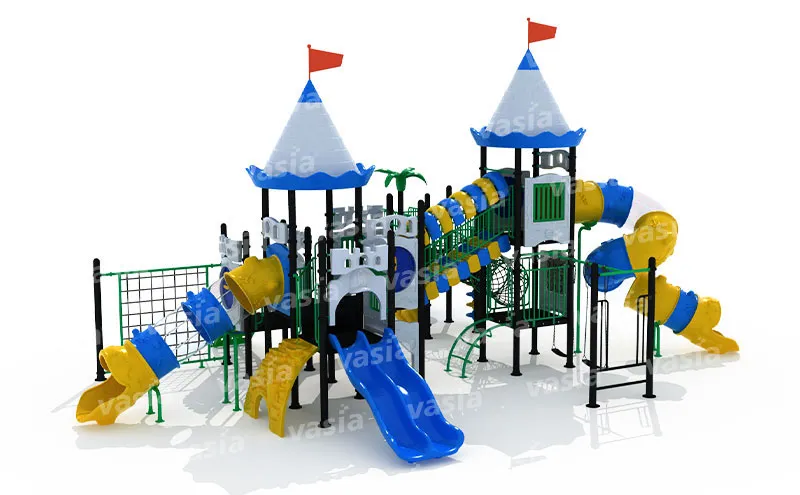
This is where the HuaXia approach changes the game. By utilizing modular park play equipment components, the brand allows for "unit-level" replacement. Instead of closing an entire playground because one deck is worn, you can swap a single module. This type of modular playground design significantly lowers the total cost of ownership compared to older, monolithic steel sets. For those looking to minimize labor-intensive upkeep, you might want to get professional selection advice regarding material lifespans.
Every climate is different. A coastal park in Florida faces salt-air corrosion, while a playground in Norway deals with freeze-thaw cycles that can crack inferior plastics. HuaXia excels here by offering customized playground coatings and material grades specifically tailored to the local environment.
When we design these spaces, we aren't just selling hardware; we are providing a safety-first ecosystem. By choosing high-performance park play equipment designed for extreme weather, you reduce the "safety anxiety" that plagues many municipal managers. To see how these custom solutions perform in real-world environments, view our latest application cases and see the difference that expert manufacturing makes.
Safety is a moving target. As standards evolve, your equipment must be adaptable. By focusing on ASTM-compliant components and a rigid maintenance schedule, you ensure that the heartbeat of your community—the local park—remains a place of joy rather than a liability. If you are unsure about the current state of your assets, it is always best to click for detailed configuration info to compare your existing setup with modern safety benchmarks.
Enter Your E-Mail


Yangwan Industrial Park, Qiaoxia, Yong Jia, Wenzhou, Zhejiang, China