Oct 20, 2026




In 2026, Playground Equipment has evolved far beyond basic swings and slides—sustainability is no longer a marketing buzzword but a non-negotiable design and procurement standard for schools, municipal parks, residential communities, and commercial developers. The eco-friendly outdoor play structures segment grew 18% year-over-year, with 70% of public project buyers prioritizing low-carbon, recyclable, and nature-integrated designs over traditional options. This shift stems from rising climate regulations, safety compliance demands, and a growing desire to create play spaces that nurture both children’s development and planetary health. Below are the 5 defining eco trends reshaping the industry this year, with actionable insights for buyers balancing sustainability, durability, and budget.
The biggest shift in 2026 is moving from single-use materials to circular economy playground design that eliminates waste at every stage—from manufacturing to end-of-life reuse. Traditional playgrounds rely on virgin plastics, non-recyclable metals, and chemically treated wood that end up in landfills after 10–15 years. Today’s leading manufacturers, including Huaxia, use post-consumer recycled plastics (from milk jugs, packaging, and industrial waste), reclaimed galvanized steel, and FSC-certified reclaimed wood to build recycled plastic playground components that are 100% recyclable at the end of their lifespan. 360iResearch data shows 33% of new 2026 installations use closed-loop materials, cutting embodied carbon by 42% compared to conventional builds. These materials resist fading, rust, rot, and vandalism, requiring 60% less maintenance over 20+ years—solving a top pain point for facility managers.
This circular model also includes modular design: individual parts can be replaced, upgraded, or repurposed instead of replacing the entire structure. For urban parks with limited space and tight budgets, this flexibility is transformative.
2026 playgrounds are merging play with nature, replacing synthetic-heavy designs with biodegradable playground materials and renewable resources that blend into outdoor landscapes. Bamboo composites, hemp-reinforced bioplastics, cork surfacing, and untreated FSC-certified natural wood are replacing toxic pressure-treated lumber and virgin HDPE. Unlike traditional wood, these renewable materials are naturally pest-resistant, UV-stabilized, and decompose safely without leaching chemicals into soil or groundwater.
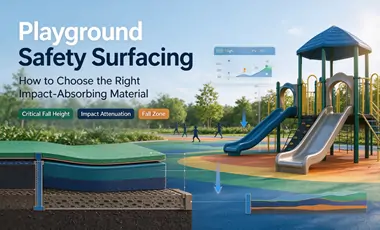
Eco-friendly impact-absorbing surfacing is another key upgrade: recycled rubber mulch from end-of-life tires, poured-in-place bio-based rubber, and engineered wood fiber replace concrete and asphalt, meeting ASTM fall safety standards while reducing plastic waste. For sensory play areas, natural stone, sand, and water features replace plastic panels, creating tactile, nature-connected experiences that support neurodiverse children’s development. This trend isn’t just aesthetic—it aligns with studies showing nature play reduces stress and boosts physical activity by 30% in children.
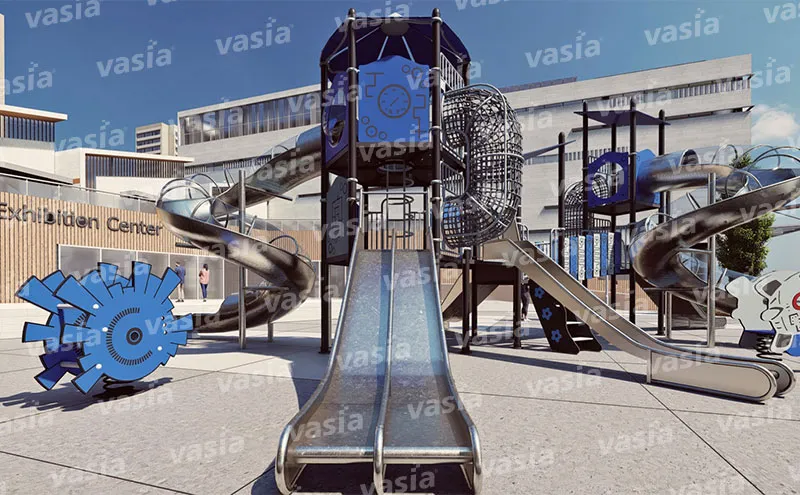
Sustainability now extends beyond materials to the entire installation process, focusing on low-carbon playground installations that minimize transportation emissions, water use, and site disruption. Huaxia’s custom approach prioritizes local sourcing of materials—cutting transport-related carbon by 35%—and prefabricated modular units that reduce on-site construction time and waste by 50% compared to on-site built structures.
Solar-powered shade structures, motion-activated LED lighting, and rainwater harvesting systems are standard in 2026 designs, turning playgrounds into small-scale green infrastructure. For schoolyards and urban pocket parks, these features lower long-term operational costs while meeting green building certifications (LEED, BREEAM). Municipal buyers report this trend reduces annual energy and water expenses by 28% for public play spaces.
Beyond energy, inclusive design is embedded into eco trends: wheelchair-accessible ramps, sensory panels, and adaptive swings are built with sustainable materials, ensuring inclusive sensory play spaces serve all children without compromising environmental goals.
Buyers in 2026 reject “cheap, short-lived” equipment—prioritizing weather-resistant eco play equipment that delivers long-term value with minimal upkeep. Conventional metal equipment rusts, plastic fades, and wood rots within a decade, requiring frequent repairs or full replacement. In contrast, modern eco materials (recycled HDPE, bamboo composites, powder-coated recycled steel) have a 20–25 year lifespan, resist extreme heat, cold, and moisture, and don’t need annual painting or chemical treatments.
Maintenance data from the National Recreation and Park Association shows eco-friendly structures cost 45% less to maintain over their lifetime than standard options—a critical factor for schools and municipalities with constrained budgets. This trend shifts procurement from “lowest upfront cost” to “total cost of ownership,” a mindset change that defines 2026 purchasing decisions.
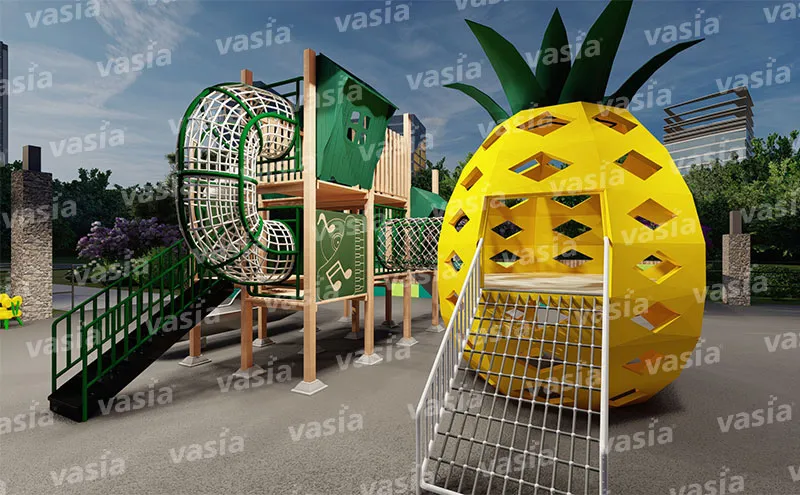
The fifth and fastest-growing trend is custom modular play systems—tailored eco-friendly designs that fit specific site constraints, age groups, and community identities, rather than one-size-fits-all prefab units. Every community, school, or park has unique needs: small urban rooftop spaces, inclusive special-needs play areas, nature-themed preschool playgrounds, or large community park complexes. Generic equipment fails to meet these needs, while custom eco designs balance sustainability, safety, and functionality.
Huaxia specializes in this space: designing modular, recyclable structures that adapt to site size, terrain, and local environmental conditions—using regional materials and incorporating community input to reflect local culture. This customization ensures play spaces are not just eco-friendly but also deeply relevant to the children who use them, increasing usage rates and community pride.
As buyers evaluate these 5 trends, the biggest challenge is choosing eco options that don’t sacrifice safety, durability, or affordability. This is where Playground Equipment designed with circular, renewable, and modular principles stands apart as the optimal solution—when compared to traditional alternatives:
This comparison makes clear that 2026’s top eco trends aren’t just about being “green”—they’re about building smarter, longer-lasting, more inclusive play spaces that deliver value for children, communities, and the planet. For buyers ready to invest in sustainable, custom play spaces that align with these trends, partnering with an experienced manufacturer ensures every design choice meets eco goals, safety standards, and budget requirements.
In conclusion, 2026’s eco trends for outdoor play structures mark a permanent shift in the industry—sustainability is now the foundation, not an add-on. By prioritizing circular materials, nature integration, low-carbon installation, low-maintenance durability, and custom modular design, buyers can create play spaces that grow with communities, protect the environment, and provide safe, engaging experiences for generations of children.

Enter Your E-Mail


Yangwan Industrial Park, Qiaoxia, Yong Jia, Wenzhou, Zhejiang, China