Apr 21, 2026




Picking age‑appropriate playground gear hinges on matching a child’s physical development, cognitive growth and risk tolerance, while complying with global safety benchmarks for reliable daily outdoor use. When browsing durable and tailored playground equipment, most buyers overlook developmental differences, leading to underused installations or avoidable outdoor injuries. Data from the National Program for Playground Safety (NPPS) shows that over 60% of childhood playground injuries stem from mismatched gear for age groups, making targeted selection the core priority for schools, communities and commercial park operators. Every child grows at a unique pace, and one‑size‑fits‑all play designs fail to nurture motor skills or protect young users effectively.
No two age groups share the same movement habits or self‑protection awareness, which is why segmented design stands as the foundation of smart selection. toddler outdoor play fixtures for 6 to 23 months old need ultra‑low structures, sealed gaps and soft contact surfaces. Infants and young toddlers crawl, stumble and grasp randomly, with tiny limbs prone to entrapment or bumps. Their play space should focus on sensory exploration and basic movement training rather than challenging activities.
Preschoolers aged 2 to 5 gain better balance and limb coordination yet remain impulsive and fearless. They crave interactive elements like hidden tunnels, gentle climbing sections and colorful activity panels. According to ASTM F2373‑11(2017) safety regulations, elevated platforms for this group require full surrounding barriers to prevent accidental falls.
Children aged 5 to 12 develop strong athletic desires and team interaction needs. They seek moderate challenges such as horizontal climbing frames, winding slides and balanced swing sets. Restricting their play to overly simple gear will trigger boredom, while overly complex designs raise hidden safety risks. Grasping these subtle developmental differences lets buyers filter unsuitable options at the initial screening stage.
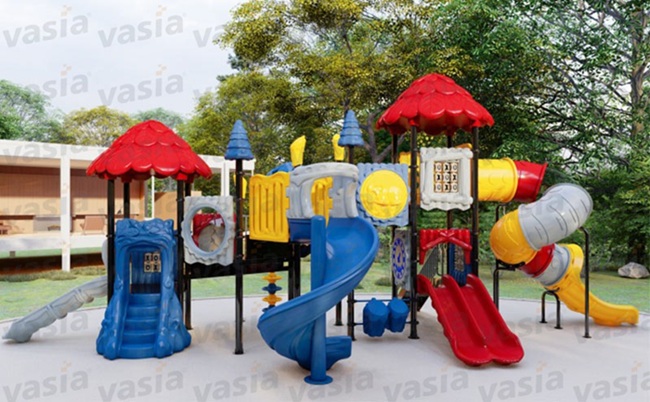
Safety is never a negotiable detail but the bottom line for long‑term operation of outdoor play spaces. impact‑resistant play area fittings must meet unified industry specifications in gap spacing, fall height and surface materials. The U.S. Consumer Product Safety Commission (CPSC) clearly stipulates that equipment gaps must be narrower than 3.5 inches or wider than 9 inches to stop head and limb entrapment, a detail many low‑cost generic products ignore.
Fall height control varies drastically by age. Toddler areas limit the maximum platform height to 32 inches, while school‑age zones allow controlled higher structures with reinforced guardrails. The ground beneath all overhead installations must be covered with shock‑absorbing materials like EPDM rubber, rubber particles or thick sand cushions to buffer falls.
Durability also ties closely to long‑term safety. Outdoor gear faces long‑term exposure to ultraviolet rays, rain and temperature changes. Inferior plastic fades and cracks quickly, while thin metal frames rust and deform. Choosing products with anti‑corrosion treatment and weather‑resistant coatings cuts later maintenance costs and extends service life.
A qualified selection plan must combine site size, usage frequency and user group positioning, instead of blindly pursuing rich functions or eye‑catching appearances. community tailored play setups for small residential yards need compact, combined structures to save space and meet mixed‑age daily play needs. Large public parks or kindergartens can divide independent play zones to isolate different age groups and reduce collision conflicts.
High‑frequency usage scenarios such as school campuses require high‑strength structural designs and wear‑resistant surfaces to cope with daily group use. Early education institutions pay more attention to soft styling, mild color matching and sensory interactive functions to assist early childhood education. Huaxia has long focused on scenario‑based customized design, adjusting gear height, difficulty and interactive modules according to customer site area, surrounding environment and user age ratio.
Many buyers fall into the trap of prioritizing appearance over practicality. Brightly colored overly fancy gear often has single functions and poor compatibility, unable to adapt to children’s changing play needs as they grow. Reasonable functional collocation should balance entertainment, exercise and growth assistance, letting play become a subtle way to promote physical and mental development.
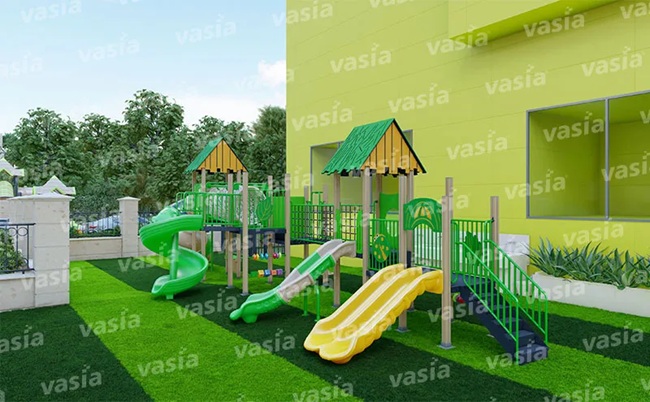
When narrowing down specific styles, horizontal comparison of different types of installations helps avoid one‑sided decisions. Traditional ordinary play facilities often adopt standardized mass production, with single functions, fixed sizes and weak adaptability to special sites. Simple assembled play parts have low costs but poor overall stability, requiring frequent inspection and maintenance, and lacking personalized adjustment space.
Modular integrated play solutions stand out in modern demand, and reasonable playground equipment integrates multiple functions such as climbing, sliding, drilling and balancing in one structure. This design not only saves space but also realizes gradual difficulty adjustment, covering the play needs of multiple age groups. Compared with scattered single products, integrated overall structures have more coordinated safety protection designs and more unified exterior styles, improving the overall texture of the play space.
In terms of customization flexibility, brand‑supported customized products far outperform generic bulk goods. Reliable manufacturers can adjust part sizes, material textures and theme styles on demand, and add exclusive anti‑pinch designs, anti‑collision wrapping and accessible structures. For project operators with long‑term operation plans, customized high‑quality configurations can effectively reduce replacement frequency and enhance regional competitiveness.
Excellent age‑appropriate selection cannot ignore later maintenance, which directly affects service life and continuous safety. low‑maintenance outdoor play components adopt integrated welding technology and anti‑aging materials, reducing daily cleaning and component replacement pressure. Some inferior gear uses spliced structures with many loose parts, which loosen after long‑term shaking and bring hidden dangers.
It is recommended to formulate regular inspection plans after installation: check the firmness of connecting parts every quarter, replace aging buffer materials every six months, and clean dust and dirt on surface gaps regularly. Brands with complete after‑sales services can provide professional maintenance guidance and quick accessory supply, solving operational worries for buyers.
Huaxia provides detailed maintenance manuals and remote technical guidance for every customized project, helping customers establish standardized management processes. For public welfare institutions and educational institutions with limited maintenance manpower, this one‑stop service model greatly optimizes long‑term use costs.
Selecting age‑appropriate playground gear is a systematic decision that blends childdevelopment science, industrial safety standards and scenario practicality. It is not simply choosing products by appearance or price, but creating a safe, interesting and growth‑oriented outdoor play environment for children of different ages. By clarifying age group characteristics, abiding by safety specifications, matching scenario demands and comparing product types, every buyer can avoid common selection mistakes.
With the continuous upgrading of outdoor play space construction, personalized customization and refined age segmentation will become the mainstream trend. Working with experienced brands like Huaxia to combine professional design, safe materials and thoughtful after‑sales support is the key to building a high‑quality long‑lasting play space.
Enter Your E-Mail


Yangwan Industrial Park, Qiaoxia, Yong Jia, Wenzhou, Zhejiang, China