Sep 18, 2026




Last summer, my neighbor Lisa stared at her backyard and sighed. The slide sat sticky with pollen, the swings barely moved in the wind, and her two boys were sprawled on the couch, tablets in hand. “We spent all spring setting this up,” she said, “and they’re already bored.” That scene isn't rare. A 2022 survey by the Outdoor Industry Association found that although 60% of parents buy play equipment to encourage outside time, nearly half report their kids lose interest within weeks. The problem usually isn’t the equipment itself — it’s the idea that it only serves one narrow purpose.
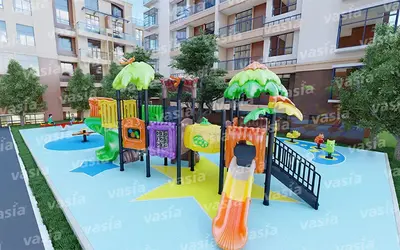
When you reframe an outdoor play structure as a flexible activity hub rather than a static piece of gear, the possibilities multiply. Drawing on input from early childhood educators, landscape designers, and real family routines, here are five usage patterns that keep the backyard buzzing, regardless of age or season.
The Centers for Disease Control and Prevention recommends that children get at least 60 minutes of moderate-to-vigorous physical activity each day. A traditional play setup often delivers that in the first few weeks, then tapers off. The fix: borrow the logic of an adult fitness circuit and let kids remix it themselves.
Use cones, chalk, or even garden stakes to mark stations — the swing becomes a core-strengthening “pumping” zone, the climbing wall a grip-endurance challenge, and the slide ladder a station for bear crawls. Time each round and let the children redesign the sequence on weekends. Elementary PE teachers often call this “adventure play,” and studies from the University of South Australia link it to improved motor coordination and longer engagement spans than unstructured free play alone.
If the structure supports modular adjustments — moving a rope ladder, adjusting platform height — circuits stay fresh without buying new add-ons. That flexibility also extends the years a family can use the same setup.
A platform isn’t just a platform. On Monday it’s the bridge of a pirate ship; by Thursday it’s a treetop veterinary clinic for stuffed-animal patients. According to Yale researcher Dr. Dorothy Singer, such imaginative play — often called “pretend play” — builds narrative thinking, empathy, and self-regulation. Yet it only thrives when the physical space doesn’t dictate the script.
Some families designate a weatherproof “prop box” near the equipment: old sheets for sails, sidewalk chalk for drawing control panels, plastic binoculars, clipboards. The rule is simple — the structure is the stage, but the props write the story. Early childhood programs in Reggio Emilia, Italy, follow a similar philosophy, using open-ended structures to invite children to reinterpret their environment repeatedly.
One practical tip: avoid permanently affixing themed panels or signs (like “grocery store” or “castle”) unless they’re reversible. The goal is to leave room for imagination to fill in the blanks. This approach doesn’t require a larger footprint, just a mindset shift — the same physical frame can host a dozen completely different games over the course of a summer month.
When children gather for play, they negotiate rules, wait their turn, and sometimes argue — all critical social skills. Michigan State University’s “Right to Recess” research notes that child-directed group play on a shared structure develops conflict resolution better than adult-moderated activities. But a generic setup often creates bottlenecks: two swings, one slide, and a queue of frustrated kids.
Re-thinking traffic flow changes everything. A sand area at the base of a tower, a speaking tube connecting two platforms, or a wide deck where four children can stand simultaneously subtly shifts the dynamic from “waiting in line” to “parallel participation.” The Swiss playground manufacturer Richter Spielgeräte has long applied this principle, designing installations where movement loops intersect but don’t collide — children can join or leave the action without breaking the game.
Safety standards matter here. ASTM F1487, the standard for public playground equipment, addresses entrapment and impact attenuation, and many of its principles — like head and neck opening dimensions — apply just as much to home setups where multiple children play at once. To understand how a safety-focused design handles high-traffic family use, learn about our safety standards drawn from those same engineering benchmarks.
Author Richard Louv coined “nature-deficit disorder” to describe the disconnect between children and the natural world. But a backyard doesn’t need to be a forest to close that gap — it just needs sensory layers alongside the physical structure.
Consider planting sturdy, non-toxic herbs like rosemary or lavender at the base of the equipment. Attach a small chalkboard to a post for drawing with rain-wet fingers. Fix a shallow water table or an old stainless-steel bowl to a lower platform — children fill it with leaves, pebbles, or ice cubes on hot days, creating their own tactile experiments. These additions cost almost nothing but transform the area into a multi-sensory microcosm.
A report from the University of British Columbia’s Human Early Learning Partnership found that sensory integration activities embedded into play improve focus and emotional regulation, especially among children who struggle with quiet indoor tasks. Notably, weather resistance and material choices become critical when moisture and soil contact increase — untreated wood or poorly coated metal won’t hold up. For families looking at options built with coastal-grade hardware and rot-resistant lumber, you can discover weather-resistant designs that support this mixed-use setup season after season.
Screen-time concerns dominate parenting conversations. Data from Common Sense Media show that children aged 8–12 average nearly five hours of entertainment screen time daily. Swapping even 45 minutes of that for outdoor group activity shifts the entire household rhythm.
Families we’ve spoken with describe a simple weekday ritual: every day at 5:30 p.m., all phones go into a basket on the porch, and the backyard equipment becomes the focal point. Mondays might involve a family obstacle-course relay using the structure’s monkey bars. Wednesdays could be “astronomy night,” lying on the platform deck after sunset to spot constellations. The key isn’t novelty; it’s predictability. Children stop negotiating screen time when the alternative becomes a stable, anticipated part of the day.
This habit stacks wins quickly. In addition to physical benefits, a 2023 longitudinal study published in JAMA Pediatrics linked consistent family outdoor time to lower anxiety scores in school-age children. And because the activity is anchored to a fixed time rather than a fixed equipment function, it stays sustainable even when interests shift. The structure becomes less of a “toy” and more of a shared family instrument.
Each of these uses — fitness circuit, imagination engine, social hub, sensory garden centerpiece, family ritual — treats the outdoor structure not as a one-time purchase but as a renewable resource. The common thread is adaptability: the more a family can reinterpret the space, the longer it stays relevant.
If you’re aiming for a professionally integrated experience where safety testing, material longevity, and configurable design align with these kinds of varied use cases, Huaxia’s design approach rewards a closer look. Their models are engineered to support exactly this range of activities — from active climbing to quiet sensory play — without forcing families into a single script.
References & Disclaimer
Outdoor Industry Association, 2022 Outdoor Participation Trends Report
CDC, Physical Activity Guidelines for School-Aged Children
University of South Australia, Adventure Play and Motor Development (2019)
Dorothy Singer, Ph.D., The House of Make-Believe (Harvard University Press)
ASTM F1487-21, Standard Consumer Safety Performance Specification for Playground Equipment for Public Use
Richard Louv, Last Child in the Woods (Algonquin Books)
Common Sense Media, The Common Sense Census: Media Use by Tweens and Teens (2021)
JAMA Pediatrics, “Family Outdoor Time and Child Mental Health” (2023)
Product information is provided for reference and does not guarantee individual results. All safety claims should be verified directly with the manufacturer.

Enter Your E-Mail


Yangwan Industrial Park, Qiaoxia, Yong Jia, Wenzhou, Zhejiang, China